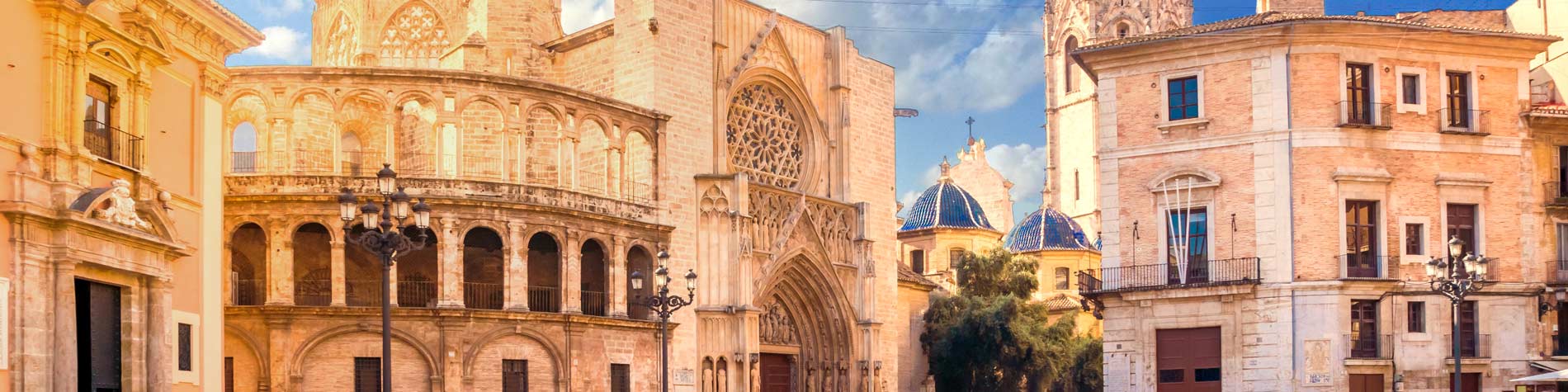


Book cheap flights to Valencia, Spain and discover a city that’s famous for its mix of old and new, city sights and coastal delights, and of course, delicious paella.
Valencia is located on Spain’s sun-kissed Orange Blossom Coast and enjoys a wonderfully sunny climate. The city also boasts one of Europe’s most up and coming food scenes, a jam-packed calendar of festivals and events and plenty of cycle-friendly trails.
When to book cheap flights to Valencia
Book cheap Valencia flights between April and May and enjoy the wonderful Mediterranean climate before it gets too hot. Temperatures in July and August peak at around 30°C. During spring the weather is quite comfortable, hovering in and around 21°C with minimal rainfall. In March the annual Las Fallas de Valencia festival takes place when hundreds of cartoonish statues called “ninots” take to the streets before being ceremoniously burned to the ground, (apart from the one dubbed the winner). With plenty to see, eat and do in Valencia, there really isn’t a bad time to book Valencia cheap flights.
What to see in Valencia
As Spain’s capital of arts and science, there’s plenty to look forward to when you book cheap flights to Valencia. Let’s start with The City of Arts and Sciences. It should be one of your first stops when you jet in on your Valencia cheap flights. It’s a state of the art culture park and one of the main landmarks of Valencia. It hosts a planetarium, an interactive museum, a performing arts centre and loads more. It’s listed as one of the 12 Treasures of Spain. The crown jewel of The City of Arts and Sciences has to be the Oceanogràfic. The aquarium is home to an amazing 45,000 marine animals from 500 different species and there isn’t another facility like this in the whole of Europe. If you want to explore things a bit more historical, the Gothic Cathedral of La Lonja de la Seda is a must-see attraction in the city. Torres de Serranos is another historical landmark you should see in Valencia. Built in 1392, a climb to the top offers some of the best views in the city. Visit the hip Barrio del Carmen, where you’ll find lots of cool bars, cafés and restaurants tucked away behind 11th century Moorish alleyways.
Getting around
The bus is a great way to get around the city and still see the sights as you travel. Combination tickets allow you to travel using both the bus and the city’s underground metro. The metro is probably the quickest and easiest way to get around the city. Exploring Valencia by bike is another attractive option. The city is cyclist friendly with plenty of open bike lanes and parks to ride around in.
What to eat in Valencia
Valencia is a city with a foodie scene on the up. From great tapas to hand-crafted chocolate, you won’t go hungry when you fly to Valencia! In the morning, you should head to Mercat Central. It’s the largest covered market in Europe offering seasonal vegetables, cured meats and fresh seafood – all sourced locally, of course. When you go for a stroll around Barrio del Carmen you’ll find plenty of restaurants that serve great tapas. La Taverna Marisa is a great place to sample the local tapas and wine. Meanwhile, La Pilareta in Barrio del Carmen is famous for its juicy mussels and is well worth checking out. Make sure you try Valencia’s famous Turron. This sweet and chewy almond nougat is usually a popular treat at Christmas, but give it a try anyway, you’re on your holidays!